
Oil & Gas Power Optimization
Your Generators Are Running. They Could Be Earning.
Most off-grid gensets run at roughly 60% load — the worst possible operating zone for your equipment. We put that wasted capacity to work, pay you for every kilowatt, and bring your fleet back into the operating range it was built for.
Total economic benefit: $70–90K per MW, per year. New revenue + reduced O&M costs.
What we do
We Find Wasted Electricity.
We Put It To Work.
We Pay You For It.
Our telemetry across dozens of operator sites tells the same story: generators idling well below the load they were built for, burning fuel for nothing.
Volt Return deploys a fully curtailable load behind your meter, draws the capacity your site isn't using, and pays you for every kilowatt delivered. The load sheds on demand — so your operation never loses access to its power.
From oil & gas pads and midstream facilities to mining operations and remote industrial sites — anywhere a natural-gas genset is running underloaded, we put that capacity to work.
See the economics →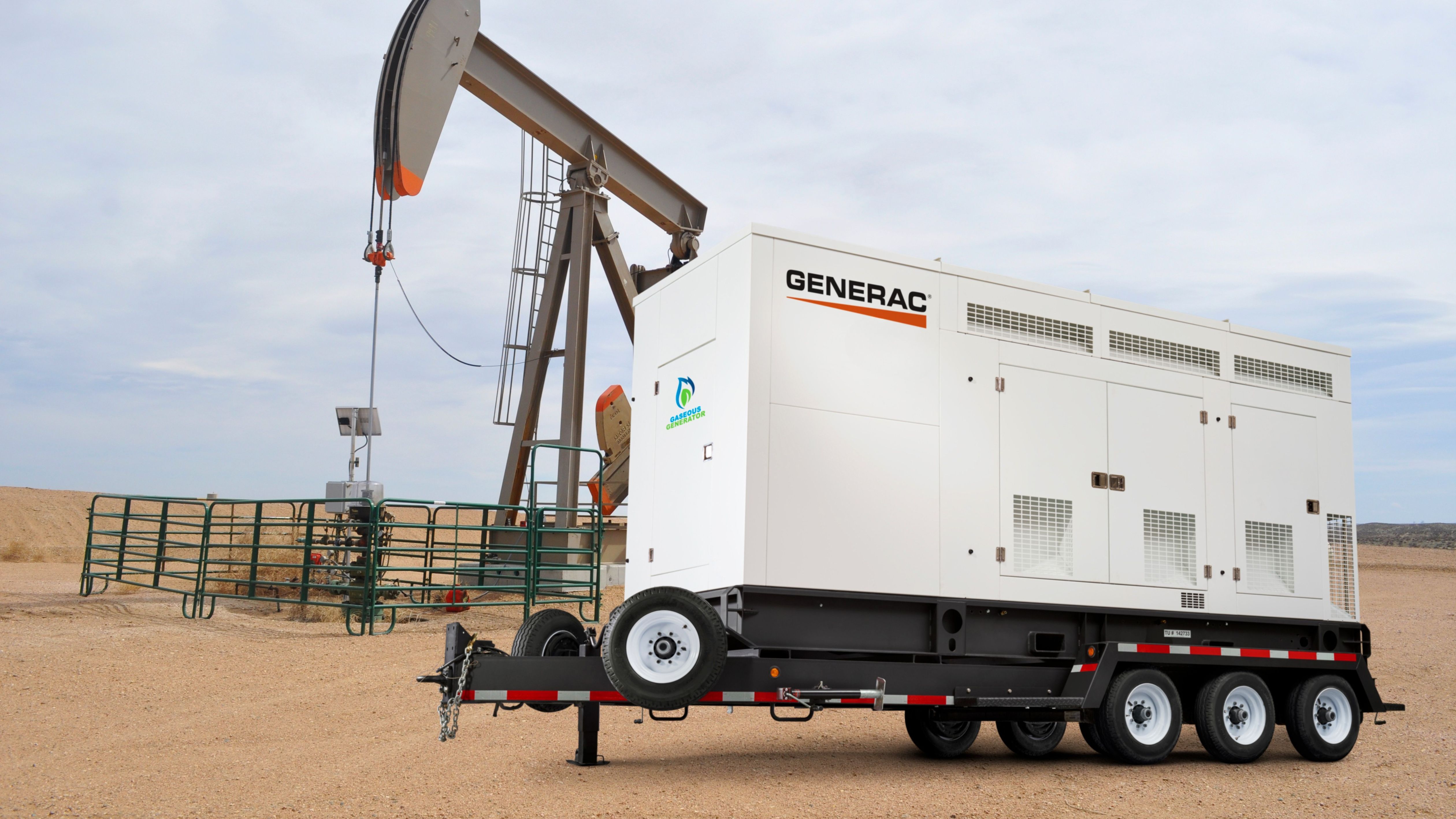
The problem
Underloaded Generators.
Hidden Costs.
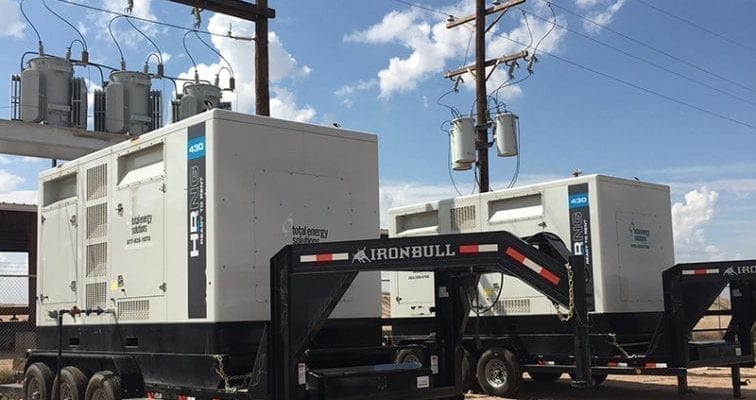
Our telemetry shows generators consistently running near 60% of rated load — the worst possible operating zone for your equipment. Sustained underload creates a multitude of problems. Every hour your fleet runs underloaded, you pay for it. Our solution allows you to run the machine where it was engineered to run: a steady, high band rather than an idling partial load.
What underload costs you
- Wet stacking and poor combustion efficiency
- Cylinder liner glazing
- Carbon fouling on injectors and valves
- Shortened overhaul intervals
- Increased O&M cost and warranty exposure
What Volt Return does about it
We bring your generators from their currently underloaded state up to 85–95% capacity — the operating zone they were engineered for. Wet stacking and carbon fouling are eliminated, overhaul intervals extend by approximately 20%, and unplanned maintenance and warranty exposure fall.
The equipment lasts longer and costs less to maintain — while it earns.
The engineering backs it up.
Our findings are documented in a technical research report referencing Caterpillar, the U.S. EPA, GE Vernova, EIA and NREL — and corroborated by Volt Return telemetry across dozens of operator sites.
Download the Technical White Paper →The economics
Monetize Surplus Generator Capacity.
Thousands of natural-gas gensets run off-grid every day — at oil & gas pads, midstream facilities, mining operations, pipeline and pumping stations, gas plants, remote facilities, and microgrids. All sized for peaks, all idling on inexpensive, abundant gas. We aggregate that idle capacity into revenue.
Where the surplus goes today
Gensets are sized for peak load — startup surges, compressor cycling, drilling spikes, jobsite ramp-up, equipment cycling. Most hours they coast at 40–60%, often near 60%. The surplus shows up in wasteful forms: gas flared or vented, electricity dumped into load banks as heat, engines throttled below their efficient range, fuel burned for nothing. None of it is monetized today.
Why not deploy a load bank that generates revenue?
New revenue
$60–75K/MW·year
Revenue from unutilized power at $0.02/kWh. Stranded capacity that currently generates nothing now produces real income.
Reduced O&M
$10–15K/MW·year
Lower operating cost from extended overhauls, eliminated wet-stacking damage, and fewer unplanned repairs.
Total benefit
$70–90K/MW·year
Combined new revenue and reduced operating cost, per megawatt, every year.
20 MW Fleet = $1.4–1.8MM/year left on the table.
That's margin you can keep, or pass through as more competitive lease pricing. The equipment lasts longer, it costs less to maintain, and it generates additional revenue.
How it works
Compute Is The Load. Shed On Demand.
The balancing load is high-performance compute (HPC). We install a containerized HPC cluster behind your meter and run it as a fully curtailable load that lifts your generator into its optimal band. Because that compute is doing valuable work — AI and high-performance workloads worth far more than the gas-fired power they draw — we can pay you for every kilowatt and still curtail to zero the instant your site needs its power back. Your process is always first in line; toggle the demo to see it.
Built to run at 85–95% (shaded)
Wells · pumps · compressors
Lifts the genset into its optimal band
Normal operations — our load holds the generator in its 85–95% sweet spot and pays you for every kilowatt.
Our Process
- 1
Site Assessment & Data Review
We analyze your fleet — load profiles, run hours, maintenance history — to quantify the opportunity at your sites.
- 2
System Deployment
We install our containerized high-performance compute (HPC) cluster on-site as the curtailable balancing load. It sheds on demand; you always retain full access to power.
- 3
Optimization & Monitoring
Your generators move to optimal load. Real-time monitoring and monthly reporting show every dollar of savings and revenue.
- 4
Ongoing Revenue & Savings
The compute earns its keep running AI and HPC workloads — which is what lets us pay you $0.02/kWh for otherwise-wasted electricity while your O&M drops. First revenue typically within 90–120 days.
Why Volt Return
Who Else Is Doing This — And Why We're Different.
Behind-the-meter compute is real — the question is whether your site is a footnote or the focus. Our balancing load is high-performance compute (HPC), and the value of that compute is exactly why we can afford to pay you for power that others simply ignore.
| Who | What they do | Why they are not for you |
|---|---|---|
| Crusoe | Pioneered flare-gas compute; now building GW-scale AI campuses. | Has exited the single-pad business. |
| Giga / Upstream Data / Validus | Containerized bitcoin mining on stranded gas. | Bitcoin-only focus and economics. |
| Lancium / Soluna | Grid-scale curtailable load, ERCOT-facing. | Sells flexibility to utilities, not to you. |
| Sharon AI / New Era Helium | Building a single natural-gas-fired data-center campus. | Greenfield campus, not existing sites. |
| Volt Return | Single-pad scale, fully curtailable load. We design customized load balancing systems specifically for 500 kW–20 MW installations. | A solution purpose-built for single-pad and small-scale installations. |
Compute is the load
The balancing load is high-performance compute (HPC) — AI and HPC workloads whose output is worth far more than the power they draw. That value is what lets us pay you for the electricity we consume.
Curtailment-first
The HPC load is fully flexible and sheds on demand. The instant your site calls for full power, the compute steps aside — you never lose access.
Zero CapEx to you
We bring the compute hardware, comms, and ops. Because that compute is valuable, you provide capacity you already produce and collect a recurring monthly check, plus lower O&M costs.
Meet the team
Technology. Finance. Deal Structuring.
Real Expertise and a Partner-Oriented Approach.
Volt Return is led by seasoned professionals with decades of experience. We've deployed over 15 MW of HPC, consulted on an additional 300+ MW of power, and launched a pilot HPC load-balancing program for a $1B+ oil & gas company. Our Partners have structured complex, multi-party deals and actively led over $1B of Capital Markets transactions. Our focus is on executing projects where all parties benefit and real value gets created.

Christopher Alexander
Partner — Strategy & Technology
Christopher Alexander focuses on high-performance computing and critical infrastructure, with extensive experience delivering large-scale, mission-critical projects in austere and resource-constrained environments for government and national security clients.
He began his career in the U.S. Army as a scout in the first-ever Reconnaissance, Surveillance, and Target Acquisition (RSTA) Squadron. Leaving the Combat Arms, he transitioned into defense and national security roles as an Information Operations and Artificial Intelligence specialist, supporting USSOCOM and other federal agencies. Christopher then moved to defense contracting, where he led and supported efforts resulting in over $300MM in awarded government contracts, delivering complex technical programs across classified and unclassified environments.
Christopher brings a practitioner's perspective to the intersection of computing, energy, and security. He has been featured as a subject-matter expert on high-performance computing, energy infrastructure, cyberwarfare, and counterterrorism on FOX News, BBC Arabic, NewsNation, the Wharton School of Business Podcast, NASDAQ.com, and the Times of Korea, among other international and financial media outlets.
At Volt Return, Christopher leads strategic planning and applies high-performance computing methodologies to industrial load balancing, power quality optimization, and energy-constrained infrastructure, translating advanced technical concepts into deployable, real-world solutions.
A decorated combat veteran, Christopher is currently an MA candidate at Harvard University, focusing on Artificial Intelligence and Ethics.
Corey Smith
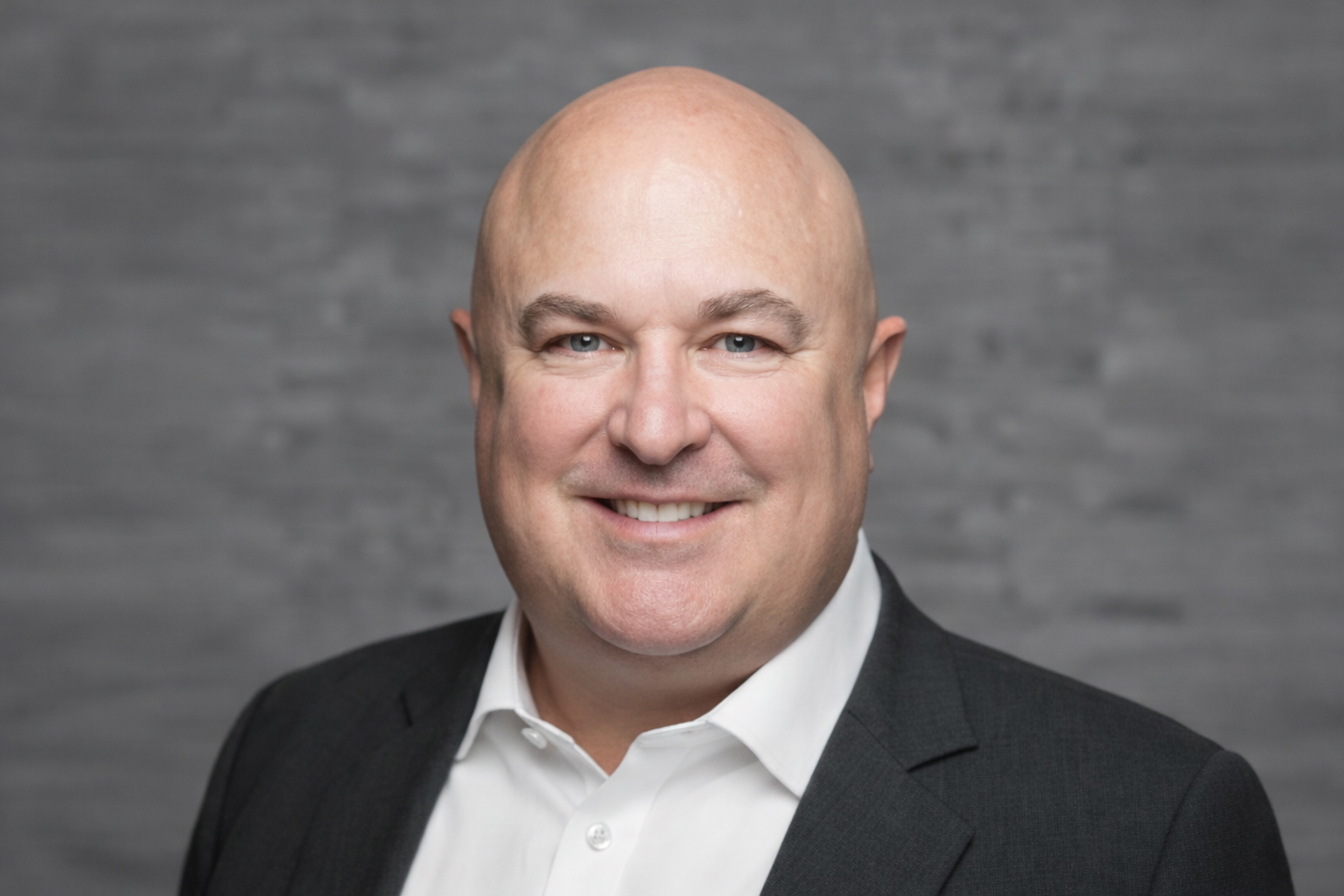
Partner — Finance & Operations
Corey Smith provides financial and operational leadership for Volt Return, leveraging a deep background in Energy, Oil & Gas, Alternative Investments, and Capital Markets. With a career defined by the development and delivery of over $1B in income-producing investment products, Corey oversees the firm's financial reporting, capital structuring, and internal operations.
Most recently, Corey served as Managing Director of Capital Markets for Covenant Royalties, a boutique Oil & Gas asset management firm, where he secured and structured over $30MM in capital from institutional and family office investors. Prior to that, he founded and led Bandon River Capital, a specialty finance firm that became a market leader in the deregulated electricity space, managing over $30MM in assets and a portfolio of 45,000 individual meters.
His executive experience includes serving as CFO/COO of VLG Marketing, where he spearheaded a successful recapitalization and overhauled internal financial controls for the $6MM agency. Corey's expertise in product innovation was honed during his tenures at Noble Royalties and ICON Investments, where he led national sales for flagship Oil & Gas Minerals and Equipment Finance Funds and launched the Non-traded Business Development Company CION Investment Corporation.
Corey spent his early career as a NASDAQ Market Maker, and was a Principal at The Heritage Organization, specializing in sophisticated tax planning for ultra-high-net-worth clients. He holds a degree in International Relations from the University of Southern California and is a dedicated musician and golfer based in Plano, TX.
FAQ
Common Questions.
What does Volt Return do?
We deploy a fully curtailable load behind your generator, draw the capacity your site isn't using, and pay you per kilowatt delivered — while bringing your fleet into its optimal 85–95% load range. Your operation always has first call on the power.
How much can I make?
About $60–75K per MW per year in new revenue at $0.02/kWh, plus $10–15K per MW per year in reduced O&M — roughly $70–90K per MW per year in total benefit. A 20-genset fleet at 1 MW each is $1.4–1.8MM per year.
Will I ever lose access to my own power?
No. Our load is fully curtailable and sheds on demand. The instant your site calls for capacity, we step out of the way — your process is always first in line.
Does this hurt my engine?
The opposite. Running near 60% load causes wet stacking, carbon fouling, and liner glazing. By holding the generator in its 85–95% design band, we eliminate those problems and extend overhaul intervals by roughly 20%.
What size generators do you work with?
Ideal is 1 MW and up, with a 500 kW practical minimum. Smaller units can be paralleled.
What kinds of sites do you serve?
Off-grid oil & gas pads, saltwater disposal facilities, midstream facilities (pipeline and pumping stations, gas plants), mining operations, remote facilities, and microgrids — anywhere a natural-gas genset is running underloaded.
How fast can you be live?
After a quick data review and deployment, generators move to optimal load and first revenue typically arrives within 90–120 days.
What does it cost me?
$0 in CapEx. We provide and operate all equipment. You provide capacity you already produce and collect a monthly check, plus lower O&M.
From your numbers to your first check
Drop In What You Have.
- 1
We read your data
SCADA export, CSV, an OEM service report — we just need the raw data, in whatever form you have it.
- 2
We model the proposal
Average load, peak, run hours and fuel — sized to your actual numbers, not a template.
- 3
Initial proposal in 5 business days
We propose an offer outlining anticipated monthly recurring revenue. No commitment required to review and evaluate.
- 4
Live load in 60–90 days
Compute hardware is staged and ready. We bring the gear, comms, and ops.
- 5
First check inside 90–120 days
Recurring monthly revenue, with no additional cost to you.
Volt Return
7200 Dallas Parkway, Suite 1322
Plano, TX 75024
Telemetry intake
- SCADA export
- CSV pull
- Genset OEM service report